Psychiatric Drug Facts via breggin.com :

“Most psychiatric drugs can cause withdrawal reactions, sometimes including life-threatening emotional and physical withdrawal problems… Withdrawal from psychiatric drugs should be done carefully under experienced clinical supervision.” Dr. Peter Breggin
Showing posts with label violence. Show all posts

Mar 6, 2013

The human cost of well-organized crime


The Dr. Peter Breggin Hour – Tony’s Story – 03/06/13


English: Zoloft
This is the most difficult and most heartfelt radio interview I have ever conducted. I talk with the surviving wife and the surviving mother of Tony Orban, an outstanding soldier and police officer driven to tragic violence and then to suicide by the antidepressant Zoloft (sertraline). As Tony’s medical expert I grew to know and to care about him and his family. A poignant reminder of the human cost of violence induced by psychiatric drugs.

The Dr. Peter Breggin Hour – Tony’s Story – 03/06/13
Under Creative Commons License: Attribution


via Ann Blake-Tracy's website SSRI Stories:

Police: Officer showed anger, boredom during alleged rape

Summary:

Paragraph 21 reads:  "Orban also told police that he had taken two anti-depressants that morning, Zoloft and Neurontin, before spending the hours leading up to attack drinking beer and margaritas with his old friend, Jelinek."

SSRI Stories Note:  The Physicians Desk Reference states: 
antidepressants can cause a craving for alcohol and alcohol abuse.  Also, the liver cannot metabolize the antidepressant and the alcohol simultaneously,  thus leading to higher levels of both alcohol and the antidepressant in the human body. Also, the mania caused by the Zoloft can result in violence and hostility. 

Soldier Cases this is just a fraction of them...
Suicide SSRIs 2008-05-05 Iraq/U.S.A. ++Soldiers Have More Post War SuicidesThan Combat Deaths in Iraq & Afghanistan
Crime Against Humanity Chantix 2008-06-17 U.S.A. ++Soldiers with Post Traumatic Stress Disorder Recruited to Test Drug the FDA Says Causes Suicide
Suicides Not Mentioned 2010-04-04 Iraq/Afghan/U.S.A. ++Soldiers: Suicides Among 20 to 24 Year Olds: 4 Times the Average: FDA Black Box For Suicidality
Ineffective SSRIs & Atypical Antipsychotic As Add-On 2011-08-30 Global ++Soldiers: 89% of Soldiers with PTSD are Taking SSRIs: Add-On of Atypical A/P Ineffective
Mania, Suicide & Violence SSRIs & SNRIs 2010-02-25 Iraq/Afghan/U.S.A. ++Soldiers: Veteran's Govt. Meeting: More Soldiers Kill Themselves Than Killed in Combat
Murder Med For Depression 2009-07-28 Iraq/Texas +Soldier Kills 5 at Baghdad Psychiatric Center on May 11th, 2009
Murder-Suicide Antidepressant 2010-08-19 Iraq/Wisconsin +Soldier, Served in Iraq: Now With National Guard Kills Wife, Child & Self: On A/D's For Two Weeks
Death Paxil/Seroquel & Benzo 2008-06-08 U.S.A. +Soldiers [Twelve] Die in Sleep from PTSD Meds As Uncovered by the Father of One of the Soldiers
Suicides SSRIs 2010-02-24 Iraq/Afghan/U.S.A. +Soldiers: Dept. of Defense Studying Link Between High Suicide Rate Among Vets & Medications
Murder Med for Depression 1999-09-03 Kentucky Soldier Accused of Beating Fellow Soldier
Murder Attempt Antidepressant & 14 Other Meds for PTSD 2010-04-27 Iraq/Nevada Soldier Ambushes Deputy


via Salem-News.com:
Jun-07-2008 15:50

The VA is more dangerous than a battle in Iraq.

(MOLALLA, Ore.) - It appears that battle veterans are getting it in the neck again (I'm saying this because this is a family Website).

Around June 1st 2008, The Charleston North Carolina, Gazette newspaper reported four battle veterans with PTSD dying from prescriptions given them by VA clinics. The medications wrere Paxil, Klonopin and Seroquel.

The father of one of the victims, Stan White, researched this and found eight more dead victims in the Kentucky, Ohio and West Virginia area. This doesn't seem to bother the VA but we/somebody should question on what is going on. As a physician/pharmacist and victim of VA hospital medical abuse, I think I know what is causing these deaths and I believe these reports are the "tip of the iceberg". Whoever is "taking care" of these battle veterans and I believe it is psychologists or social workers rather than physician/psychiatrists.

Therein lies the problem. A medical adage is, if one pill doesn't work, take two and if that still doesn't work take more ir add a similar medication. This is standard operating procedure (SOP) in the VA rather than good medical care. The combination can be/is lethal.

The deaths of those 12 veterans should be a red flag of danger but I suspect VA psychologists are color blind also.

The article in the newspaper brought about 17 letters to the editor which indicate the readers know more than the VA caretakers.

one writer wrote "Seroquel turns one into a zombie". A physician, Dr. Ann Blake Tracy wrote "two of this type of drug should never be given together." She questions the rationale of the "doctors".

Another mother wrote of her son's death from Zyprexa v which is in the same family.

Another wrote of the recent article that anti-depressants don't work. Another relates the same of Progentin which was pulled from use.

It is time for a real evaluation of VA treatment for PTSD battle veterans. Although they represent less than one percent of the population, they produce 20 percent of the deaths by suicide- multiple tragedies.

Yes, treatment by the VA is far more dangerous than combat in Baghdad. Hoorah and blessings to my brothers in the Infantry.

As a final statement, my 400+ Vietnam Veterans say marijuana works better (and safer) than ANY of the above drugs. 


Got a question or comment for Dr. Leveque?

Email him: Newsroom@Salem-News.com
More information on the history of Leveque can be found in his book,General Patton's Dogface Soldier of Phil Leveque about his experiences in WWII.Order the book by mail by following this link: Dogface Soldier.
If you are a World War II history buff, you don't want to miss it.


hat tip: Ginger Breggin

Sep 18, 2012

Mental Health Advocacy and the Ethics of Journalism


The above quote could and does apply to many aspects of human life. I don't believe I will ever become adjusted to the manner in which mental health issues are reported by mainstream journalists. Specifically, the manner in which "the news" is presented is as if speculation, supposition and gossip are in "news."

Ethical journalism or reporting the news is (at least theoretically) an unbiased presentation of facts and information of interest to the public. Much of the journalism in our country is biased, it's used by some as a tool to further a specific agenda, or promote an ideology, idea, or perspective; i.e. as propaganda.

When there are fatalities and the supect is known to have, or is suspected of having a psychiatric diagnosis, the vast majority of what is initially reported is gossip and speculation. Depending upon the event, the amount of morbid or prurient interest, fear or revulsion that can be generated; influences how accurately "the news" will be reported. When a story titillates, awakens fear, revulsion or morbid fascination in the general public, our individual biases are reinforced. An individual’s biases are based on ignorance and fear; fed misinformation, our biases become bigotry. When the source of misinformation is the evening “news,” our biases are in effect, "validated." Our subsequent discriminatory perspective is in this way basically justified as "natural" or "normal;" if  recognized at all.

The subtle changes are gradual and because the changes are based on shared experiences the shift in our perspective is almost imperceptable. Biases grow into bigoted perspectives and discriminatory treatment. When our biases are fed and validated by the media, endorsed by advocacy groups, the people who do not agree with the biologically biased perspective or condone the discriminatory treatment, are "uninformed;" or perhaps even, one of those "mentally ill" people the advocates are advocating for. In the case of "advocates for the seriously mentally ill" individual members and individual groups can have self-interests that are contrary to the best interests of "the seriously mentally ill" they are advocating for. One major glaring Conflicts of Interest is being funded by pharmaceutical companies and advised by the unethical "professionals" who sell their products through the advocacy group's education and advocacy programs; these groups fail to advocate for the people who are disabled and otherwise harmed by the “safe and effective” drug or electro-shock treatments.

In some cases, the people are in fact Court Ordered to treatment that never "worked" or "successfully treated" their symptoms. Self-appointed advocates enthusiastically support and insist coercive treatment "saves lives;" and proclaim it is "necessary medical treatment. Some people say their lives were saved, or that involuntary treatment "helped" them personally; how do these anecdotes justify court ordering other individuals? While it is true that some people are "successfully treated," i.e. get better, become more functional; it is equally true that some are harmed grievously, including being permanently disabled and killed by psychiatric treatment.

Court Ordering people to special treatment with teratogenic drugs and/or electro-shock devices that are not safe, only minimally effective, illegally marketed or never safety tested, when the "treatment" risks are both disabling and fatal, is despicable; morally reprehensible.

When a person with a psychiatric diagnosis is the victim of interpersonal violence due to their symptoms making someone target them, it's not reported as a hate crime; incredibly, reporters and self-appointed advocates alike seem to believe it is acceptable to blame the victim, or to blame the victim's "untreated mental illness" for having been victimized. Advocates do not advocate for the victim by demanding that perpetrators be held accountable for victimizing people who are already in distress... In reality, it is tragic when anyone is victimized and a victim is killed. It is particularly heinous when the victim and/or their psychiatric diagnosis is used to excuse the criminal acts of a perpetrator who victimized them.

Psuedo-reporting compounds the tragedy, and inevitably it leads to calls for increased forced treatment, as if forced psychiatric treatment is the panacea which will cure society. Do people really believe that coercion, subterfuge, and inflicting distress is required to simply provide ethical "necessary medical treatment" eve that it is acceptable to mislead patients and the public about the subjective, (not scientific) nature of psychiatric diagnostic criteria and standard psychiatric treatment protocols, are based on subjective observations of psychiatric professionals which are then put to a vote to develop a consensus. Empirical data must be the foundation of a "standard" treatment; having  a statistical record of successfully treating a variety of patients for a particular illness or symptom it is HOW a particular treatment becomes the "standard" of care for a particular condition or symptom.

An ethical standard of care would not require using deceit, or justify it with an abuse of power and authority. An ethical standard of care would not rely upon coercion, force, and deceit; no ethical physician would purposely mislead or misinform a patient and/or their family members about the nature of their diagnosis and the actual effects of the recommended treatment, much less claim that it's a using subterfuge and social control tactics actually successfully treats "seriously mentally ill" people! We don't even count how many psychiatric patients are iatrogenically disabled or killed; there is no way to accurately, ethically, balance the hoped for benefits of psychiatric treatment against the potentially disabling, and fatal risks. Without considering all the data, including the adverse event data, there no way to ethically determine whether the benefits are worth the risks to and for a particular patient.

As a result of unethical reporting, the general public is misinformed, and consequently, is at a disadvantage when attempting to analyze the issues involved; unethical reporting in the main stream media misinforms the general public. Journalists are not reporting the news if they merely sharing of press releases from marketing departments or public relations firms. The results of psychiatric research, clinical trials, people with a diagnosed mental illness and pharmacological  treatments, are seldom reported ethically; i.e. reported after an independent verification of the facts. Just as importantly, when the results are controversial or disputed, the controversies are seldom reported; as the Ethics Guidelines for Journalism suggest. Reports in print or broadcast news are frequently only press releases written by marketing departments of the drug company that funded the study, or public relations departments of the University where research was conducted. Regardless of the source, without independent verification of the facts, this practice, is not ethical reporting. The failure to even attempt to provide an unbiased recitation of the facts or the issues involved when mental illness and the treatments used, is simply irresponsible, and it is not ethical journalism. It is in recognition of the fact that reporting events and issues without bias is difficult, since all people and groups of people have biases; that a Code of Ethics for Journalism was developed.

Mainstream media's quest for market share, increased ratings and profits contribute (unintentionally) to the innate biases of the uninformed general public. These biases are further fanned into flame when the pseudo-news reports misinform and the product of lax journalism ultimately becomes propaganda used by extremists, “grassroots” advocacy groups, columnists and other rightwing extremists to advocate for increasing the number of people legally compelled under Court Order to receive forced psychiatric treatment.

Lax ethical standards in journalism are intended to garner higher ratings, which in turn lead to increased revenue. Low standards are used because the intended goal of increased profits are realized. While I understand this is how business is 'done,' this is pseudo-reporting disseminating misinformation. This type of misinformation is used to put a veneer of legitimacy on bigotry; and used to gain the general public's acceptance of the mistreatment of people with a psychiatric diagnosis. It serves to increase the discrimination experienced by people with a psychiatric diagnosis in general; and in particular, of the people who are targeted for forced treatment.

From the Ethics Code for Journalism Preamble:

"Members of the Society of Professional Journalists believe that public enlightenment is the forerunner of justice and the foundation of democracy. The duty of the journalist is to further those ends by seeking truth and providing a fair and comprehensive account of events and issues. Conscientious journalists from all media and specialties strive to serve the public with thoroughness and honesty. Professional integrity is the cornerstone of a journalist's credibility. Members of the Society share a dedication to ethical behavior and adopt this code to declare the Society's principles and standards of practice." more here.

Rightwing extremists in the United States "reject federal authority in favor of state or local authority." Rightwing extremists, "may include groups and individuals that are dedicated to a single issue,"  according to the Department of Homeland Security Office of Intelligence and Assessment Analysis. One example would be advocates who are propoments of forced psychiatric treatment, inpatient or in the community. Court ordering people to take neuroleptic drugs to prevent violence is a seriously flawed strategy. Many advocacy groups for the mentally ill appear to see nothing wrong when the Constitutional Rights of individuals Court Ordered to Involuntary Treatment are violated, because their intent is to be helpful. These protections must be effectively preserved and defended for all people; they are Human Rights.

It appears rightwing mental health advocacy extremists reject government authority entirely. When I read the document the above bold face statements are in, I could not help noticing the description is applicable to right-wing mental health advocates who focus their efforts almost exclusively towards the strengthening and implementation of forced psychiatric treatment laws. This is due to an apparent belief that forced treatment is THE Holy Grail which will save the general public from being victimized. The outrageous claim that their advocacy is only to ensure these "poor unfortunates" receive needed “medical treatment.” These advocates further claim the only reason that the “seriously mentally ill refuse or object to "medical treatment" is because they have NO INSIGHT WHATSOEVER; and protest because they "don't know what is good for them." It is further claimed this lack of insight is due having a "brain disease." The fact of the matter is, there is no evidence that "serious mental illness" results from "brain disease." Besides, in medicine, brain diseases are treated by neurologists, not psychiatrists!

via The Free Library:
The loss of client agency into the psychopharmaceutical--industrial complex

Those disorders listed in the DSM-IV-TR for which a clear, undeniable disease process is present (e.g., Alzheimer's disease and other various forms of dementia) or a clear genetic defect has been located (i.e., Rett's disorder) fall under the purview of neurology, not psychiatry (Ducommun-Nagy, 2003; Encyclopedia of Mind Disorders, 2005; Glasser, 2003). Psychiatrist Kenneth Kendler (2005), co-editor-in-chief of Psychological Medicine, stated, "We [psychiatrists] have hunted for big, simple neuropathological explanations for psychiatric disorders and have not found them. We have hunted for big, simple neurochemical explanations for psychiatric disorders and have not found them. We have hunted for big, simple genetic explanations for psychiatric disorders and have not found them" (pp. 434-435).

"Despite the lack of clear evidence for neuropathological, neurochemical, or genetic explanations for psychiatric disorders, the beliefs in such are heavily perpetuated by psychopharmacologists and physiological psychiatrists (Valenstein, 1998), who differ from the declining number of psychiatrists and psychiatric nurse practitioners who appreciate the contextual factors affecting mental health. Psychopharmacologists and physiological psychiatrists believe that mental health problems reduce down to chemical and electrical exchanges between brain cells (neurons). With this philosophy, psychotropic medications are marketed aggressively and prescribed indiscriminately (Rosenheck, 2005; Schultz, 2004, Wazana, 2000) with the message that these medications will correct alleged brain defects related to psychiatric disorders." read more here.

The US Constitution is the preeminent law in the United States; the provisions and protections of this document supersede any and all State, County, or Municipal Laws and Codes whether passed by legislation or statutory authority. Any Laws which diminish Individual Liberty must only be undertaken when such infringement has been determined necessary by a Court of Law, and is only done lawfully when the individual's Constitutional Rights to Procedural Due Process of Law are protected. These Rights include: Proper Notice given and Affidavits of Service being filed, Rules of Evidence followed, Standard Court Procedures used and Effective Assistance of Counsel provided. The Constitutional Rights of those who are court ordered are in fact NOT preserved, by being described within the law. These individual rights can only be effectively preserved and defended for individuals that are properly served, notice filed with the Court clerk, Rules of Evidence followed, Standard Court procedures adhered to, and Effective Assistance of Counsel is available. When any of these protections are denied an individual, Justice is conspicuously absent.

It is common for the Rules of Evidence to be modified by Involuntary Treatment statutes; an effective lowering of the standards required to deprive individuals of their Liberty. Mental health professionals and advocates believe that using coercion and gossip is not only acceptable, but that it's necessary to facilitate obtaining these Court Orders which deprive an individual of their liberty. In these cases, proper notice is often ignored altogether. When people are Court Ordered in this manner, whether it is to inpatient or outpatient involuntary treatment, the commitment orders are illegal since using these lower standards violates the individual's Constitutional Rights as a matter of course.

Mainstream media becomes complicit by the using biased reporting to garner ratings or sell more copies. Failing to report relevant facts in an unbiased ethical manner is irresponsible and capricious. The reasoning of right-wing extremist advocacy groups who claim to be advocates “for the seriously mentally ill” seems to be based on bigotry; and is fueled by ignorance and fear. It's no surprise that this type of advocacy effectively serves the advocacy groups primary benefactor's financial interests. The majority of mainstream advocacy groups receive a significant percentage of their financial support from drug companies, and it is the drug companies who are the primary beneficiaries of compulsive psychiatric treatment.

Right-wing extremists in the "Mental Health Advocacy" movement exploit a variety of social issues and political themes to increase visibility and recruit new members; this has always been the case with extremist groups throughout history. These extremists remain focused on a predetermined agenda, forced treatment, regardless of new information, legal ramifications, financial and societal costs, or the real world outcomes of the individuals with a psychiatric diagnosis who are victimized. It is patently absurd for any advocate to claim that any negative effect of their advocacy is justified by their altruistic intent.

Why does psychiatry, with it's history of lobotomies, water tortures, Electric Shock, forced sterilizations and other outrageous tortures and it's ongoing collusion in pharmaceutical fraud have Police Powers? What has this profession done that could conceivably justify granting it such power? How has society allowed psychiatry to effectively gain unprecedented authority and society's passive participation in the inhumane treatment of an entire class of people?

I doubt the families of American Veterans returning from Afghanistan and Iraq traumatized who have died in their sleep, here and here or who commit suicide/homicide here due to drug induced psychosis, would agree the drugs are "safe and effective." In 2008, 52 Marines taking psychiatric drugs took their own lives.

Children are given psychiatric drugs that are approved and not approved for pediatric use; psychiatry calls drugs which are not approved for pediatric use, "off label" drug use, the FDA, "experimental" drug use. Would the parents of children who have died suddenly from cardiac arrest, respiratory failure, other drug induced causes; or parents whose who child is now brain damaged and/or disabled by iatrogenic illness or disease from psychiatric drugs agree the drugs are "safe and effective?" Between 2000 and 2004 the FDA adverse drug reaction reporting system linked antipsychotic drugs to 45 child deaths and 1,300 serious adverse reactions, such as convulsions and low white blood cell count. These are the very same drugs recently approved by the FDA for widespread use in children. Child Deaths here and here.

Psychiatry does not, and never has held itself to the Ethical Guidelines of the Medical Profession, or to any law or social norm recognized. The tactics utilized and the position of power granted to psychiatry validate oppression, elevated the oppressors; placing them above the law.

Lobotomies and mass sterilizations were still happening when I was a kid, and I am the mother of a son who was used in Drug Trials. Drug trials of the "new safer more expensive" antipsychotics; now APPROVED based on these trials for WIDESPREAD use in children!? I am horrified. I am my son's caregiver, and I am grateful he is still alive. How many children will die or become disabled before the FDA and the Department of Justice prosecute the psychiatrists and other "mental health professionals" are complicit in a massive criminal enterprise that is defrauding public health systems and who fail to disclose the risks, and fail to obtain Informed Consent?

Psychiatry is a specialty whose methods are unethical; they are often not therapeutic, but harmful. These methods and treatments are killing our children, our traumatized Veterans and our elderly; with impunity. Claiming to be treating “brain diseases,” yet failing to provide any empirical data, e.g. scientific evidence “brain diseases;” even exist! Any and all signs and symptoms of distress are now considered evidence of "brain diseases;" if they actually were diseases, these "diseases" would be treated by a neurologist.

When will the general public realize that the "special treatment" provided by force is not therapeutic; not only does it not enable recovery, but it can cause those "treated" to die? Psychiatry now has been given Police Powers and has perverted the Court System to sentence people to treatments which can cripple and kill them; without preserving their individual rights to Procedural Due Process of Law. It is inhumane, unjust and is unconstitutional!

Members of America's Armed Forces take an oath to defend Our Country and The Constitution of the United States of America against all enemies, foreign and domestic. Some of those lucky enough to return home have then been killed by psychiatrists "practicing medicine." None of them have been jailed for their crimes, it is unconscionable. 
 

Jon McClellan, the psychiatrist who gave my son huge amounts of neuroleptic drugs without Informed Consent for either the drugs or for inclusion in the TEOSS drug trials; repeatedly stated my consent was not needed; my opinion was irrelevant, my parental rights denied. My boy's protests were met with coercive tactics: specifically, he was told he would never get to leave the locked psychiatric facility he was held in as a “voluntary” patient, if he did not take the drugs. The fact is, no psychiatrist who has caused death or iatrogenic illness and disability with "safe and effective treatments," drugs or Electrical Shock, has been held accountable.

Incredibly, unethical research psychiatrists like Harvard’s Biederman, can become a Scientific Advisor to the Child and Adolescent Bipolar Foundation, a "patient advocacy" group. Psychiatry continues to use his fraudulent research to teach those who diagnose and treat our Nation’s children. No articles in psychiatric journals from this or any other discredited researcher are redacted out of psychiatric journals. Jon McClellan is still the Medical Director of a Washington State Psychiatric Facility, and a professor at the University of Washington, and has participated in an ethics workshops at the The Hastings Center.

Psychiatry is more a system of political and social control than a "medical" specialty; of this, I have no doubt. Whether you agree with me or not, I urge you to consider if it's prudent to allow psychiatry to use the Police and the Courts as it's medical instruments of treatment compliance. These are the very same tactics used in Germany that enabled the Third Reich to "legally" torture and kill millions of people; and the very same standards that psychiatry utilized in the United States to "legally" strip people of their dignity and their Human Rights in order to lobotomize and/or sterilize them.

Psychiatry is still using the same tactics, calling the new ways of causing brain damage, terror, trauma, iatrogenic injury and iatrogenic disease "safe and efficacious medical treatment" for "brain diseases;" without producing any evidence of a disease pathology that is being treated, or even exists. Psychiatry has a history when carefully considered, does not justify the position of power and authority that it wields with impunity. As a medical specialty, it has not demonstrated the integrity required to be trusted or respected.

If psychiatry's treatments are safe and effective, why are so many children, the elderly and traumatized Veterans, (among others) disabled before dying prematurely? More importantly, why are the Courts and the Police needed to practice medicine? Why are psychiatric diagnoses legally adjudicated instead of medically diagnosed? Psychiatric diagnoses become a permanent legal record, even though the diagnoses are the result of subjective opinion, and are not verified by facts that would comply with the Rules of Evidence required for every other Civil or Criminal Court proceeding.

Do journalists who simply "report" without independently verifying facts have a conscience? Do they not remember World War II? It was psychiatry that provided the efficient methods of control used to exterminate millions--it was psychiatry that was already killing the "mental defectives" in institutions so efficiently that the Third Reich asked psychiatrists to help carry out Hitler’s diabolical plan.

People are inundated with direct-to-consumer marketing pf prescription drugs on the internet, in print and broadcast news stations; does this contribute to the type of "reporting" that is done by journalists? Has the income from the advertising and direct-to-consumer marketing of drugs created a Conflict of Interest and compromised the integrity of the Journalism profession?

My sense of morality will not allow me to adjust to unethical psychiatric standards. Advocacy groups champion unethical psychiatric standards and pharmaceutical fraud and corruption. Extremist mental health advocacy groups ignore victims whose lives are laid to waste, while proclaiming they are advocating for what is in the victim's "best interest." Victims are further traumatized and victimized in no small part due to this type of advocacy. I will not adjust to the Constitution being set aside for psychiatry to "safely treat" emotional and behavioral difficulties they rename "brain diseases" in an effort to validate their questionable practices. I will not adjust to psychiatry being given the power to maim and kill under Color of Law, by Court Order.

It is definitely unethical for advocacy groups for the seriously mentally ill to be funded by the pharmaceutical industry, and use the information developed by marketing departments of the pharmaceutical industry in educational and advocacy activities conducted "in the public interest."

If I were to adjust to how psychiatry is currently practiced, I would in effect be approving and supporting crimes against humanity, crimes that have been perpetrated by mental health professionals which have seriously harmed my son and my fellow man.


"I believe we must speak our conscience in moments that demand it, 
even if we are but one voice" 
Richard B. Sanders


"God grant me the courage not to give up what I think is right even though I think it is hopeless." 
Chester W. Nimitz


"Whenever a doctor cannot do good, he must be kept from doing harm." 
Hippocrates

I pray for Humanity to heal and hope to see evidence of it in my lifetime
Until then, I can only imagine...


First posted on January 21, 2011 in response to the shootings in Arizona, and titled, 
"Mental Health Advocacy Extremists are Aided by Lack of Journalism Ethics"

Jul 2, 2012

Blowing Smoke: Smoking Cessation and Drug Safety

BLOOMBERG VIA GETTY IMAGES

via Journal of Clinical Psychiatry:
A Randomized, Double-Blind, Placebo-Controlled Study Evaluating the Safety and Efficacy of Varenicline for Smoking Cessation in Patients With Schizophrenia or Schizoaffective Disorder
J Clin Psychiatry 2012;73(5):654–660
10.4088/JCP.11m07522
Copyright 2012 Physicians Postgraduate Press, Inc.
Objective: Effective smoking cessation treatments are needed for patients with schizophrenia, who, compared with the general population, have high rates of cigarette smoking and more difficulty quitting. We evaluated the safety and efficacy of varenicline for smoking cessation in outpatients with stable schizophrenia or schizoaffective disorder.
Method: In this 12-week, randomized, double-blind, multicenter trial (May 8, 2008, to April 1, 2010), 127 smokers (≥ 15 cigarettes/d) with DSM-IV–confirmed schizophrenia or schizoaffective disorder received varenicline or placebo (2:1 ratio). The primary outcome was safety and tolerability of varenicline assessed by adverse events frequency and changes in ratings on the Positive and Negative Syndrome Scale and other psychiatric scales from baseline to 24 weeks. Abstinence was defined as no smoking 7 days prior to weeks 12 and 24, verified by carbon monoxide level.
Results: Eighty-four participants received varenicline; 43, placebo. At 12 weeks (end of treatment), 16/84 varenicline-treated patients (19.0%) met smoking cessation criteria versus 2/43 (4.7%) for placebo (P = .046). At 24 weeks, 10/84 (11.9%) varenicline-treated and 1/43 (2.3%) placebo-treated patients, respectively, met abstinence criteria (P = .090). Total adverse event rates were similar between groups, with no significant changes in symptoms of schizophrenia or in mood and anxiety ratings. Rates of suicidal ideation adverse events were 6.0% (varenicline) and 7.0% (placebo) (P = 1.0). There was 1 suicide attempt by a varenicline patient with a lifetime history of similar attempts and no completed suicides.
Conclusions: Varenicline was well tolerated, with no evidence of exacerbation of symptoms, and was associated with significantly higher smoking cessation rates versus placebo at 12 weeks. Our findings suggest varenicline is a suitable smoking cessation therapy for patients with schizophrenia or schizoaffective disorder.
Trial Registration: ClinicalTrials.gov identifier: NCT00644969
J Clin Psychiatry 2012;73(5):654–660
Submitted: November 8, 2011; accepted February 28, 2012(doi:10.4088/JCP.11m07522).
Corresponding author: Jill M. Williams, MD, UMDNJ-Robert Wood Johnson Medical School, 317 George St, Ste 105, New Brunswick, NJ 08901 (williajm@umdnj.edu). here
I can't help but be suspicious of the conclusion offered in this article. "Varenicline was well tolerated, with no evidence of exacerbation of symptoms."  This conclusion definitely helps secure a place in the market for Chantix as a stop smoking aid for people with a diagnosis of schizophrenia or schizoaffective disorder. What is strange is the trial was conducted at nine different sites.  Why? There were only 128 participants...This article only mentions one suicide attempt; it does not mention any incidences of adverse effects commonly associated with Chantix.  The  trial was conducted by Pfizer, in it's own facilities, the primary outcome measure was safety, and no safety issues were identified in the study. 

This trial trial was conducted for the primary purpose of exploiting psychiatric patients as a means to an end, the end being increasing the market for Chantix, to fulfill Pfizer's marketing agenda... It's obvious from reading this, they expected to have serious safety problems; yet luckily for Pfizer's marketing department and for Pfizer it's stockholders, there was, the authors state, "no evidence of problems." Pfizer found no evidence that Chantix can cause and/or exacerbate psychosis, as is well-documented in the FDA AERS data.

According to the FDA Adverse Event Reporting System: CHANTIX had the highest number of adverse events reported to the FDA for psychiatric symptoms in the second quarter of 2010. The reason? Increased levels of hostility, aggression, and increased symptoms of psychosis... 

via The Institute For Safe Medication Practices:


QuarterWatch: 2010 Quarter 2

Monitoring MedWatch Reports

January 27, 2011

Signals for Varenicline, Levofloxacin and Fentanyl


Varenicline (CHANTIX) 

Safety Problems Continue

"Despite a prominent boxed warning, a mandatory Medication Guide for every patient and declining use, the stop-smoking drug varenicline (CHANTIX) continued to account for large numbers of reported serious psychiatric side effects. In the second quarter the drug was suspect in more possible cases of hostility-aggression, depression and psychosis than any other monitored drug." here


31 Prescription Drugs Are Linked to 387 Homicides 
and 1,527 acts of violence... 
via PLoS ONE:
Prescription Drugs Associated with Reports of Violence Towards Others
Moore TJ, Glenmullen J, Furberg CD (2010) Prescription Drugs Associated with Reports of Violence Towards Others. PLoS ONE 5(12): e15337. doi:10.1371/journal.pone.0015337
a couple of excerpts:
"These data provide new evidence that acts of violence towards others are a genuine and serious adverse drug event that is associated with a relatively small group of drugs. Varenicline, which increases the availability of dopamine, and serotonin reuptake inhibitors were the most strongly and consistently implicated drugs."

"This study, however, contains numerous features intended to minimize the limitations of adverse event data from postmarketing surveillance. The proportional reporting ratio takes into account two possibilities: a) that wider use or a higher reporting rate exposes a drug to a greater chance of having a violence case attributed, and b) that a higher number of reports might have occurred by chance. The varying results among drugs for smoking cessation and the mood stabilizers show it is unlikely that the violence events are attributed to existing problems in the patient populations treated. Also, the focus of this study was on specific event terms that unequivocally described a violent act or thought – such as homicide or physical assault. By excluding more general adverse event terms such as “aggression” or “anger” many thousands of less specific cases were eliminated under the study criteria. While this means that the study did not count many possible cases of violence towards others (a loss of sensitivity) the restrictive criteria increased specificity. However, given that violent thoughts or actions are not typically attributed to drug therapy or recorded in medical records, the reporting rate for violence cases could be very low. The selected violence cases do not provide a reliable estimate of how often they might occur."

The SSRIS with the most reports of adverse events between 2004 and September 2009 were Prozac with 72 reports for violence defined as homicide, homicidal ideation, physical assault, physical abuse or violence related symptoms; Paxil had 177. read here


picture found at Time Healthland

Apr 16, 2012

Madison Ruppert Interviews Dr. Yolande Lucire on End the Lie Radio

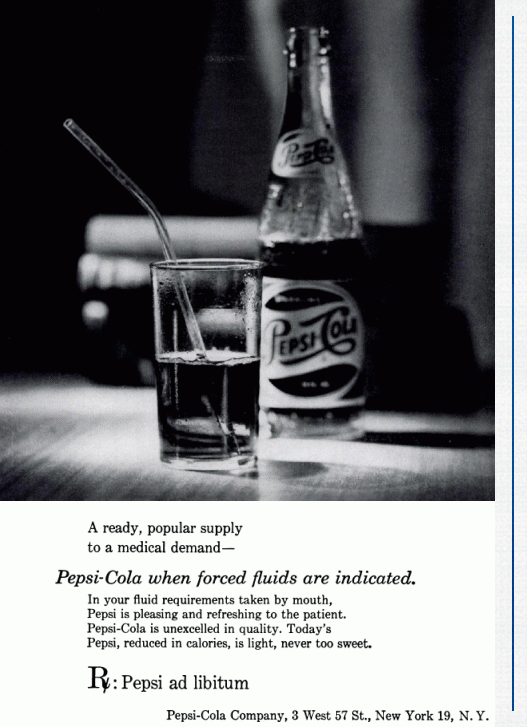
a ready, popular supply to a medical demand

End the Lie Radio with Madison Ruppert - Episode 11

Antidepressant-induced akathisia-related homicides associated with diminishing mutations in metabolizing genes of the CYP450 family

Authors: Lucire Y, Crotty C

Published Date August 2011 Volume 2011:4 Pages 65 - 81
DOI: http://dx.doi.org/10.2147/PGPM.S17445

Yolande Lucire, Christopher Crotty
Edgecliff Centre, Edgecliff, NSW, Australia

Purpose: To examine the relation between variant alleles in 3 CYP450 genes (CYP2D6, CYP2C9 and CYP2C19), interacting drugs and akathisia in subjects referred to a forensic psychiatry practice in Sydney, Australia.
Patients and methods: This paper concerns 10/129 subjects who had been referred to the first author’s practice for expert opinion or treatment. More than 120 subjects were diagnosed with akathisia/serotonin toxicity after taking psychiatric medication that had been prescribed for psychosocial distress. They were tested for variant alleles in CYP450 genes, which play a major role in Phase I metabolism of all antidepressant and many other medications. Eight had committed homicide and many more became extremely violent while on antidepressants. Ten representative case histories involving serious violence are presented in detail.
Results: Variant CYP450 allele frequencies were higher in akathisia subjects compared with random primary care patients tested at the same facility. Ten subjects described in detail had variant alleles for one or more of their tested CYP450 genes. All but two were also on interacting drugs, herbals or illicit substances, impairing metabolism further. All those described were able to stop taking antidepressants and return to their previously normal personalities.
Conclusion: The personal, medical, and legal problems arising from overuse of antidepressant medications and resulting toxicity raise the question: how can such toxicity events be understood and prevented? The authors suggest that the key lies in understanding the interplay between the subject’s CYP450 genotype, substrate drugs and doses, co-prescribed inhibitors and inducers and the age of the subject. The results presented here concerning a sample of persons given antidepressants for psychosocial distress demonstrate the extent to which the psychopharmacology industry has expanded its influence beyond its ability to cure. The roles of both regulatory agencies and drug safety “pharmacovigilantes” in ensuring quality and transparency of industry information is highlighted.

Keywords: adverse drug reaction, drug therapy, safety pharmacogenetics, CYP1A2, CYP3A4 CYP2D6, CYP2C9, CYP2C19, drug metabolism, public health, suicide, violence, human rights


Download entire article PDF from Dove Press


Pepsi Advertisement found at Bonkers Institute 


Jan 26, 2011

Is Thomas Insel, NIMH Director Too Biased to Be Objective?

Understanding Severe Mental Illness

"When a tragedy occurs like the shooting in Tucson this past weekend, all of us seek an explanation. While there remain many questions, a leading hypothesis is that the suspect has a serious mental illness (SMI), such as schizophrenia. The topic of violence and mental illness is never an easy discussion: with issues such as stigma, incarceration, public safety, and involuntary treatment in the mix. There is a legitimate concern that talking about violence and mental illness in the same sentence increases the likelihood that people with serious illness will be further marginalized and less likely to receive appropriate care. But tragic events, whether at a Safeway in Tucson or a classroom at Virginia Tech, require us to address this uncomfortable subject with the science available."
"Is violence more common in people with SMI? Yes, during an episode of psychosis, especially psychosis associated with paranoia and so-called “command hallucinations”, the risk of violence is increased. People with SMI are up to three times more likely to be violent and when associated with substance abuse disorders, the risk may increase much further."i DJ Jaffe used the preceding, but not the following, which would have put into perspective the actual percentage of violent crime committed by those diagnosed with schizophrenia, in comparison with all violent crime; and that those with a diagnosis are at increased risk of being victimized by violent crime.
As Insels states, "But, mental illness contributes very little to the overall rate of violence in the community. Most people with SMI are not violent, and most violent acts are not committed by people with SMI. In fact, people with SMI are actually at higher risk of being victims of violence than perpetrators. Teplin et al found that those with SMI are 11 times more likely to be victims of violent crime than the general population."ii
"The most common form of violence associated with mental illness is not against others, but rather, against oneself. In 2007, the most recent year for which we have statistics, there were almost 35,000 suicides, nearly twice the rate of homicides. Suicide is the 10th leading cause of death in the United States.iii Although it is not possible to know what prompted every suicide, it is safe to say that unrecognized, untreated mental illness is a leading culprit."
This above italicized statement is pure speculation. A statement like this coming from a scientist, who is in charge of directing the National Institutes of Mental Health, it is wholly irresponsible.  Particularly since research shows that antidepressants are not statistically any better than placebo for treating depression; and even cause some people to feel worse, and SSRIs can actually increase the suicide risk!  Citing overall suicide statistics, instead of data specific  to those with "serious mental illness" avoids having to extrapolate relevant information from subjective reports from people  who survived suicide attempts who are diagnosed with schizophrenia, bipolar and schizoaffective disorder who state that the horrendous adverse neurological and cognitive effects the drugs cause is what compelled  them to attempt suicide.  

Insel's inference that suicide is because not enough people receive treatment, i.e. psychotropic drugs; but failing to mention that many people can't tolerate the terrible adverse effects of the drugs, presents a biased and incomplete picture.  Are we expected to believe that the permanent neurological, cognitive and emotional negative effects of the drugs that many cite as the reason for their suicide attempt, is due to a supposed lack of insight?  Insel's inference is simplistic, biased and ignores the subjective experiences of an entire group of patients.  Insel's high suicide rate theory that not enough people are being drugged, is not grounded in anything but thin air.  The  blatant failure to acknowledge, or validate the subjective experiences of a single patient, let alone an entire group of patients, is unacceptable.  In this paragraph, Insel in effect, ignores the subjective experiences and treatment outcomes for thousands of patients.  In so doing, Insel neatly avoids telling the truth about the real world outcomes for people given neuroleptic drugs.  Insel fails his duty to the American people by failing to provide unbiased, accurate  information on the suicide data for an entire class of people. 
"Treatment may be the key to reducing the risk of violence, whether that violence is self-directed or directed at others. Research has suggested that those with schizophrenia whose psychotic symptoms are controlled are no more violent than those without SMI.iv It’s likely that treatment not only helps ease the symptoms of mental illness, but also curbs the potential for violence as well."
"As we learn more about the circumstances surrounding the tragedy in Tucson, we should be working harder to ensure people with SMI receive the care they need. Early intervention offers the best hope to prevent more tragedies in the future."  
"For more information on SMI and other mental health statistics, please visit NIMH’s Statistics page."
"Information on coping with trauma."

iSwanson JW. Mental disorder, substance abuse, and community violence: an epidemiological approach. In: Monahan J, Steadman HJ, eds. Violence and mental disorder: developments in risk assessment. Chicago: University of Chicago Press, 1994:101-36.
iiTeplin et al. Crime victimization in adults with severe mental illness. Archives of General Psychiatry.2005 Aug. 62. 911-921.
iiiCenters for Disease Control and Prevention, National Center for Injury Prevention and Control. Web-based Injury Statistics Query and Reporting System (WISQARS). www.cdc.gov/ncipc/wisqars.
ivSteadman HJ, Mulvey EP, Monahan J, et al. Violence by people discharged from acute psychiatric inpatient facilities and by others in the same neighborhoods. Arch Gen Psychiatry 1998;55:393-401.
my thoughts
This is beyond believable!   What is likely true is that while use of neuroleptics may initially "curbs the potential for violence as well," it is causing neurological and cognitive damage.  With continued treatment, the damage may progress to cause an increase in aggression due to the BRAIN DAMAGE!  The drugs used to "treat" schizophrenia also often cause akathisia  which is associated with aggression and violence.  Patients who develop akathisia describe an inner restlessness that some have further described as relentless torture; a compulsion to always be pacing, rocking and be in constant movement.  Some, after stopping the drugs, find the effects are permanent. 
I agree with Dr. Insel that, "Early intervention offers the best hope to prevent more tragedies in the future." I do not agree that drugs are always the intervention needed.  With the serious deleterious effects and the potential for dependence, withdrawal and rebound psychosis which are adverse effects inherent with the use of all neuroleptic drugs, it is hard to fathom current standard clinical practice.   

These well documented risks are not disclosed in the Consent process; causing me to wonder about the integrity of  psychiatry, as an ethical medical specialty.  This is a fundamental failing that is widely accepted that is ignored when writing clinical "standards of care." While failing almost universally and totally to disclose the potential for harm, Psychiatrists label patients who are traumatized,  protest the harmful effects, and claim  the drugs are not helpful as "noncompliant;" or  worse declare that they have anosognosia. While it may be true  that some patient's lack insight; it is equally true that psychiatrists can have biases which prevent recognition of their own lack of insight.  Worse, are the professionals who minimize a patient's complaints about the prescribed drug's adverse effects, because they seem to be willfully blind to the patient's iatrogenic injuries, which are medically neglected. 
Many psychiatrists are  apparently afflicted by an inability to think critically or understand that the patient's subjective experiences and opinions truly do matter in a supportive, therapeutic relationship.  A therapeutic relationship requires mutual respect, particularly respect for the patient's human rights, and the ability to empathize with a pateint in distress.   These are fundamental to earning a patient's trust on a human level and critical to the ethical practice of psychiatry.  Why do so many psychiatrists not seem to realize this? Some don't even seem to understand that even a person in distress is aware if they are actually respected, or that trust needs to be earned by a psychiatrist who hopes to be able to help a person; even if the professional doesn't believe that a patient has any insight.
It seems to me, the way psychiatry is practiced relying on biased information, abuse of power and authority, coercion, police powers, and court orders; psychiatry is making sure, "that people with serious illness will be further marginalized and less likely to receive appropriate care." (and less likely to seek it!) As for Insel's, "legitimate concern that talking about violence and mental illness in the same sentence increases the likelihood" of those psychiatrically labeled being further marginalized; his concern does not appear to motivate the director of NIMH to rely on unbiased and valid information when writing his blog. It is dishonest (and unethical) for Thomas Insel to neglect mentioning that the very drugs he claims are "necessary medical treatment" in the prevention of aggressive and violent behavior in people diagnosed with mental illnesses, are in fact well-known to increase violent, aggressive, suicidal and homicidal behaviors for a statistically significant number of people who are prescribed neuroleptic, and other psychotropic drugs...

Shame on you, Thomas Insel!

LinkWithin

Related Posts Plugin for WordPress, Blogger...

FAIR USE NOTICE: This may contain copyrighted
(C) material the use of which has not always been specifically authorized by the copyright owner. Such material is made available for educational purposes, to advance understanding of human rights, democracy, scientific, moral, ethical, and social justice issues, etc. It is believed that this constitutes a 'fair use' of any such copyrighted material as provided for in Title 17 U.S.C. section 107 of the US Copyright Law. This material is distributed without profit.