Psychiatric Drug Facts via breggin.com :

“Most psychiatric drugs can cause withdrawal reactions, sometimes including life-threatening emotional and physical withdrawal problems… Withdrawal from psychiatric drugs should be done carefully under experienced clinical supervision.” Dr. Peter Breggin
Showing posts with label Military. Show all posts

Mar 6, 2013

The human cost of well-organized crime


The Dr. Peter Breggin Hour – Tony’s Story – 03/06/13


English: Zoloft
This is the most difficult and most heartfelt radio interview I have ever conducted. I talk with the surviving wife and the surviving mother of Tony Orban, an outstanding soldier and police officer driven to tragic violence and then to suicide by the antidepressant Zoloft (sertraline). As Tony’s medical expert I grew to know and to care about him and his family. A poignant reminder of the human cost of violence induced by psychiatric drugs.

The Dr. Peter Breggin Hour – Tony’s Story – 03/06/13
Under Creative Commons License: Attribution


via Ann Blake-Tracy's website SSRI Stories:

Police: Officer showed anger, boredom during alleged rape

Summary:

Paragraph 21 reads:  "Orban also told police that he had taken two anti-depressants that morning, Zoloft and Neurontin, before spending the hours leading up to attack drinking beer and margaritas with his old friend, Jelinek."

SSRI Stories Note:  The Physicians Desk Reference states: 
antidepressants can cause a craving for alcohol and alcohol abuse.  Also, the liver cannot metabolize the antidepressant and the alcohol simultaneously,  thus leading to higher levels of both alcohol and the antidepressant in the human body. Also, the mania caused by the Zoloft can result in violence and hostility. 

Soldier Cases this is just a fraction of them...
Suicide SSRIs 2008-05-05 Iraq/U.S.A. ++Soldiers Have More Post War SuicidesThan Combat Deaths in Iraq & Afghanistan
Crime Against Humanity Chantix 2008-06-17 U.S.A. ++Soldiers with Post Traumatic Stress Disorder Recruited to Test Drug the FDA Says Causes Suicide
Suicides Not Mentioned 2010-04-04 Iraq/Afghan/U.S.A. ++Soldiers: Suicides Among 20 to 24 Year Olds: 4 Times the Average: FDA Black Box For Suicidality
Ineffective SSRIs & Atypical Antipsychotic As Add-On 2011-08-30 Global ++Soldiers: 89% of Soldiers with PTSD are Taking SSRIs: Add-On of Atypical A/P Ineffective
Mania, Suicide & Violence SSRIs & SNRIs 2010-02-25 Iraq/Afghan/U.S.A. ++Soldiers: Veteran's Govt. Meeting: More Soldiers Kill Themselves Than Killed in Combat
Murder Med For Depression 2009-07-28 Iraq/Texas +Soldier Kills 5 at Baghdad Psychiatric Center on May 11th, 2009
Murder-Suicide Antidepressant 2010-08-19 Iraq/Wisconsin +Soldier, Served in Iraq: Now With National Guard Kills Wife, Child & Self: On A/D's For Two Weeks
Death Paxil/Seroquel & Benzo 2008-06-08 U.S.A. +Soldiers [Twelve] Die in Sleep from PTSD Meds As Uncovered by the Father of One of the Soldiers
Suicides SSRIs 2010-02-24 Iraq/Afghan/U.S.A. +Soldiers: Dept. of Defense Studying Link Between High Suicide Rate Among Vets & Medications
Murder Med for Depression 1999-09-03 Kentucky Soldier Accused of Beating Fellow Soldier
Murder Attempt Antidepressant & 14 Other Meds for PTSD 2010-04-27 Iraq/Nevada Soldier Ambushes Deputy


via Salem-News.com:
Jun-07-2008 15:50

The VA is more dangerous than a battle in Iraq.

(MOLALLA, Ore.) - It appears that battle veterans are getting it in the neck again (I'm saying this because this is a family Website).

Around June 1st 2008, The Charleston North Carolina, Gazette newspaper reported four battle veterans with PTSD dying from prescriptions given them by VA clinics. The medications wrere Paxil, Klonopin and Seroquel.

The father of one of the victims, Stan White, researched this and found eight more dead victims in the Kentucky, Ohio and West Virginia area. This doesn't seem to bother the VA but we/somebody should question on what is going on. As a physician/pharmacist and victim of VA hospital medical abuse, I think I know what is causing these deaths and I believe these reports are the "tip of the iceberg". Whoever is "taking care" of these battle veterans and I believe it is psychologists or social workers rather than physician/psychiatrists.

Therein lies the problem. A medical adage is, if one pill doesn't work, take two and if that still doesn't work take more ir add a similar medication. This is standard operating procedure (SOP) in the VA rather than good medical care. The combination can be/is lethal.

The deaths of those 12 veterans should be a red flag of danger but I suspect VA psychologists are color blind also.

The article in the newspaper brought about 17 letters to the editor which indicate the readers know more than the VA caretakers.

one writer wrote "Seroquel turns one into a zombie". A physician, Dr. Ann Blake Tracy wrote "two of this type of drug should never be given together." She questions the rationale of the "doctors".

Another mother wrote of her son's death from Zyprexa v which is in the same family.

Another wrote of the recent article that anti-depressants don't work. Another relates the same of Progentin which was pulled from use.

It is time for a real evaluation of VA treatment for PTSD battle veterans. Although they represent less than one percent of the population, they produce 20 percent of the deaths by suicide- multiple tragedies.

Yes, treatment by the VA is far more dangerous than combat in Baghdad. Hoorah and blessings to my brothers in the Infantry.

As a final statement, my 400+ Vietnam Veterans say marijuana works better (and safer) than ANY of the above drugs. 

                                                   
Got a question or comment for Dr. Leveque?

Email him: Newsroom@Salem-News.com
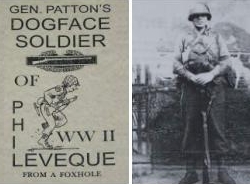
More information on the history of Leveque can be found in his book,General Patton's Dogface Soldier of Phil Leveque about his experiences in WWII.Order the book by mail by following this link: Dogface Soldier.
If you are a World War II history buff, you don't want to miss it.


hat tip: Ginger Breggin

Jun 14, 2012

The Drugging of U.S. Troops


via NextGov:
ARMY WARNS DOCTORS AGAINST USING CERTAIN DRUGS IN PTSD TREATMENT
By Bob Brewin April 25, 2012
Flickr user deanslife 

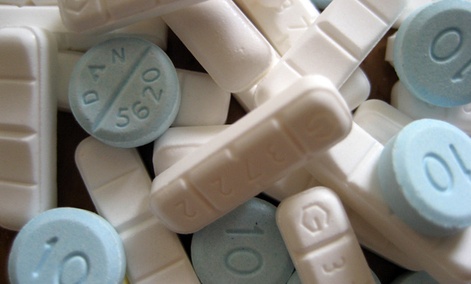
The Army Surgeon General's office is backing away from its long-standing endorsement of prescribing troops multiple highly addictive psychotropic drugs for the treatment of post-traumatic stress disorder and early this month warned regional medical commanders against using tranquilizers such as Xanax and Valium to treat PTSD.

An April 10 policy memo that the Army Medical Command released regarding the diagnosis and treatment of PTSD said a class of drugs known as benzodiazepines, which include Xanax and Valium, could intensify rather than reduce combat stress symptoms and lead to addiction.

The memo, signed by Herbert Coley, civilian chief of staff of the Army Medical Command, also cautioned service clinicians against prescribing second-generation antipsychotic drugs, such as Seroquel and Risperidone, to combat PTSD. The drugs originally were developed to treat severe mental conditions such as schizophrenia and bipolar disorder. The memo questioned the efficacy of this drug class in PTSD treatment and cautioned against their use due to potential long-term health effects, which include heart disorders, muscle spasms and weight gain.

Throughout more than a decade of war in Afghanistan and Iraq, the military services have relied heavily on prescription drugs to help troops deal with their mental health problems during and after deployment. In a June 2010 report, the Defense Department's Pharmacoeconomic Center said 213,972, or 20 percent of the 1.1 million active-duty troops surveyed, were taking some form of psychotropic drug -- antidepressants, antipsychotics, sedative hypnotics or other controlled substances.

The Army, in a July 2010 report on suicide prevention, said one-third of all active-duty military suicides involved prescription drugs.

May 9, 2012

Seeding Trials planned in an effort to validate current clinical practice


On April 27th I wrote about the Army's Surgeon General, warning against the use of neuroleptic and other psychotropic drugs to treat the symptoms of PTSD. Today, I see a link to Army launches study of PTSD Meds on the Mad in America site---I can't help but think this is a response to the Army Surgeon General's office backing away from it's long standing endorsement of using psychotropic drugs to treat PTSD. Herbert Coley, civilian chief of staff of the Army's Medical Command issued a memo citing lack of efficacy and the serious risks of using neuroleptic and other addictive neurotoxins as the reason for issuing a warning against using psychiatric drugs to treat PTSD. This current announcement was made initially at the American Psychiatric Association's meeting in Philadelphia on May 5th by Army Maj. Gary Wynn of the Walter Reed Army Institute of Research and Col. David Benedik, associate director for the Center for the Study of Traumatic Stress at the Uniformed Services University of the Health Sciences, and reported in Air Force Times appears to be announcing a plan to conduct 'seeding trials.' Seeding Trials are drug trials conducted with the primary goal of validating 'off-label' prescribing practices, gaining FDA approval to use a drug for a different symptom, and EXPAND THE DRUG MARKET. Obviously, this is unethical, This decision announced at the APA convention should be recognized as a decision to continue serving the profit interests of the drug industry, it cannot be a decision made with the well-being and recovery of Veterans experiencing PTSD as the primary focus. I wonder if Veteran's recovery was considered at all...

I cannot help but be amazed at how openly it is being acknowledged that the drugs used 'off-label' to treat PTSD without any definitive evidence to support using the drugs this way; is in fact a Standard Practice.  Using psychiatric drugs 'off-label' is not a decision  based on objective scientific data or ethical medical standards; it is based on Standard Practices and practice parameters which were adopted in the absence of objective, empirical evidence to support or validate them; ignoring fundamental, ethical medical principles.  Specifically, the principle that treatments used in Standard Practice are supposed to be derived from valid evidence of efficacy...including a risk profile which is justified by the actual benefits achieved.  The article in the Air Force Times makes it crystal clear that the treatment of PTSD for Veterans with neurotoxic psychiatric drugs is not now, and has never been based on Scientific Evidence or sound medical judgement.  

It is Human Experimentation to use drugs or other  treatments without valid evidence of effectiveness  and safety... This means that ethical medical principles are not being used when psychiatric drugs are prescribed 'off-label.'   Psychiatric treatment using drugs "off-label" that is not based on any valid or relevant evidence ignores sound medical reasoning altogether.  Small wonder the  bio-disease paradigm is an abject failure in terms of providing ethical, effective patient-centered care. Ethical clinical care requires that treatment decisions be based on ethical medical principles.  Fundamental principles of providing ethical clinical care require a clinician's primary focus be the individual patient's best interest.  This requires an honest dialogue which is respectful and honest. A professional has a duty to fully inform the patient about the diagnosis and the treatment options, which includes doing nothing; i.e. no treatment.  Informed Consent must be obtained without coercion or fraudulent claims and informing the patient about the potential risks and the possible benefits truthfully; and includes supporting the person who makes the decision to consult others of their own choosing.  Informed Consent is obtained prior to treatment starting, and is it is not a final decision; but is supposed to be an ongoing dialogue. Consent can be withdrawn without fear of or threat of punitive action, coercion or abuse of authority.

Three sentences in the article in particular indicate that treatment of PTSD with psychiatric drugs is without scientific validity; making it experimental treatment:


1. "But little data exists on which “off-label” medications work and which don’t."  
2. "Physicians still assess their patients and treat their symptoms based on their own medical experience as well as patient history and treatment preferences." 
3. “We’re trying to advance the science to catch up with clinical practice,” Wynn said. “This effort will seek to provide clinicians with a higher level of evidence when choosing a drug.” 

Theoretically, treatments used in Standard Practice are derived from scientific evidence, e.g. BASED on empirical evidence that a drug is safe and efficacious treatment for the condition it is being prescribed for; with the data supported by subjective observation and opinion.  In the biomedical paradigm of psychiatric care, standard treatment recommendations are overly reliant upon and sometimes entirely derived from subjective opinions.  A consensus of even well-educated opinions is no substitute for scientific evidence, and pretending that it is is ethically and morally reprehensible.   Clinical treatment "standard practices" are often not supported by the evidence; in some cases, the treatment is contraindicated by the clinical trial data making it unethical and unnecessarily risky. 

Psychiatry is using a bio-medical paradigm not grounded in valid research findings
or based on ethical medical principles.


via Air Force Times: 


By Patricia Kime - Staff writer
Posted : Tuesday May 8, 2012 16:21:49 EDT
Military and Veterans Affairs Department physicians often prescribe medication to ease the symptoms of combat-related post-traumatic stress disorder, even though only two antidepressants — Paxil and Zoloft — are approved specifically by the Food and Drug Administration to treat the disorder.
But little data exists on which “off-label” medications work and which don’t. 
The Army is hoping to change this, launching a major research initiative next year on the effectiveness of commonly prescribed medications for PTSD.
Speaking at the American Psychiatric Association meeting in Philadelphia on Monday, Army Maj. Gary Wynn of the Walter Reed Army Institute of Research and Col. David Benedik, associate director for the Center for the Study of Traumatic Stress at the Uniformed Services University of the Health Sciences, said the service will start clinical trials next year to evaluate commonly prescribed PTSD medications such as the antidepressant Cymbalta, mirtazapine, prazosin, and atypical antipsychotics like Seroquel.
VA and the Defense Department published joint guidelines in 2010 to provide doctors with assessments of the known research on many psychiatric medications used for PTSD.
But the guidance, which recommends strongly against the use of benzodiazapines like Valium and Xanax and several other medications, is not absolute. Physicians still assess their patients and treat their symptoms based on their own medical experience as well as patient history and treatment preferences.
Often this means prescribing medications developed to treat other mental conditions.
The Army research will test commonly prescribed medications over the next several years at multiple sites with hundreds of service members and veterans.
“We’re trying to advance the science to catch up with clinical practice,” Wynn said. “This effort will seek to provide clinicians with a higher level of evidence when choosing a drug.”
Wynn and Benedik hope their efforts will lead to better treatments for PTSD in both combat veterans and civilians.
“For pharmaceuticals that show benefits in treating combat-related PTSD, the Department of Defense may work toward a new indication or change in labeling,” Wynn said.
Published results from the first trial are expected by 2016.

First-Line Pharmacological Treatment For PTSD: Developed From Insufficient Evidence

Do neuroleptics like Seroquel and Risperdal, have a valid medical purpose used "off-label"?

Champions of Change? God Bless America and Protect Her Defenders...


FYI:

Mar 24, 2012

The Comprehensive Soldier Fitness Program


via Mindhacks Blog: 

Wishful resilience

a few excerpts:
"The New York Times has an extended article that uncritically dicusses a $125 million US Military programme currently designed to increase resilience against mental illness." 
"If you were going to base your program on a psychometric assessment, most importantly, you would want to know that your assessment predicted problems or coping in particular soldiers.
"For example, if a particular soldier had a low score on, let’s say, the emotional fitness part of the scale, it would be important to know that tells us about what sort of problems the soldier is likely to have in real life and during his or her service.
"You would also want to know that the assessment told us about the likelihood of the solider getting mental illness. It makes sense, right? If you’ve designed a programme intended to prevent mental illness based on an assessment, the assessment should tell us which soldiers are at higher risk for psychiatric difficulties so we can help with skills and abilities to mitigate that risk.
"In psychological jargon, this is known as predictive validity and it can be tested statistically.
"It is not known whether the Global Assessment Tool does actually predicts anything useful about US soldiers’ problems because this was never tested." (emphasis mine) read here
Reading the article in the New York Times, I was stunned to read,  "A core principle of the program is seeing an event as neutral, neither bad nor good, and focusing instead on your reaction to the event."   I have read about sociopaths who have described using very similar cognitive behavioral techniques when committing crimes.  


What is Comprehensive Soldier Fitness?

A structured, long term assessment and development program to build the resilience and enhance the performance of every Soldier, Family member and DA civilian.

Sounds good, but what does that actually mean?  Well it means the largest ever psychology research project is now underway, according to American Psychological Association.
via The Society for Humanistic Psychology 
DIVISION 32 OF THE AMERICAN PSYCHOLOGICAL ASSOCIATION:
MONDAY, JULY 11, 2011
The Dark Side of "Comprehensive Soldier Fitness"
an excerpt:
"Although its advocates prefer to describe Comprehensive Soldier Fitness as a training program, it is indisputably a research project of enormous size and scope, one in which a million soldiers are required to participate. Reivich, Seligman, and McBride write in one of the special issue articles, "We hypothesize that these skills will enhance soldiers' ability to handle adversity, prevent depression and anxiety, prevent PTSD, and enhance overall well-being and performance" (p. 26, emphasis added). This is the very core of the entire CSF program, yet it is merely a hypothesis -- a tentative explanation or prediction that can only be confirmed through further research."

"There seems to be reluctance and inconsistency among the CSF promoters in acknowledging that CSF is "research" and therefore should entail certain protections routinely granted to those who participate in research studies. Seligman explained to the APA's Monitor on Psychology, "This is the largest study -- 1.1 million soldiers -- psychology has ever been involved in" (a "study" is a common synonym for "research project"). But when asked during an NPR interview whether CSF would be "the largest-ever experiment," Brig. Gen. Cornum, who oversees the program, responded, "Well, we're not describing it as an experiment. We're describing it as training." Despite the fact that CSF is incontrovertibly a research study, standard and important questions about experimental interventions like CSF are neither asked nor answered in the special issue. This neglect is all the more troubling given that the program is so massive and expensive, and the stakes are so high." read here

NOW this puts the Champions of Change award ceremony or whatever that whole production was, into perspective for me:  It was an effort to pretty something up and sell it for something it is not; effectively make it more than what it actually is---just another massive research project being called 'training.'  NOT NICE, (or ethical) AT ALL...

Dec 8, 2011

AMERICA'S VETERANS HAVE EARNED MORE THAN OUR GRATITUDE!


It was announced that returning Veterans will no longer need to document the specific event which traumatized them, and caused them to experience symptoms of PTSD.  This is definitely a start in the right direction to helping returning troops in adjusting to returning Stateside.  Eliminating some of the red tape they have to deal with will be a welcome relief; and will enable veterans to focus on their health, and their families.  It will hopefully enable them to quickly access whatever help they need to recover from their injuries.  Trauma induced injuries are a natural response to traumatic experiences; which can have a devastating impact on a person's overall health long-term, if not swiftly and effectively treated.  PTSD is a never a sign of weakness; it is simply evidence of one's humanity---like bleeding when cut open. 

I have had a link to the International Hyperbaric Medical Foundation (Real hope for Veterans) for quite some time in the Veteran's page here on Involuntary Transformation, this type of treatment is known to assist in the recovery from PTSD and TBI which are extremely devastating injuries and more unfortunately, common injuries inflicted upon soldiers serving in Afghanistan and Iraq.   I urge you to check out this site; on the main page there is a link to send and email to your State Senator and State Representatives asking that they support this legislation.  I pray you will find this cause worthy of your support.  Let's give our returning Veterans a fighting chance for a full recovery from the invisible injuries of TBI and PTSD!  These injuries are devastating and can prevent their successful return to civilian life; or a continued career serving in the United States Military.

AMERICA'S VETERANS HAVE EARNED MORE THAN OUR GRATITUDE!

an excerpt:

"Hyperbaric oxygen therapy has been requested for veterans by Commanders and Veterans Service organizations alike. General Conway, when Commandant of the Marine Corps, reported to the House Armed Services Committee about sending some of his most injured Marines to Dr. Harch in New Orleans to receive Hyperbaric treatment. General Chandler, as Vice Chief of Staff of the Air Force requested Chairman Levin provide hyperbaric treatments to his Airmen in the SASC hearing on Suicide in 2010, and Chairman Levin agreed. The American Legion asked for this treatment in their Senate testimony last year. The TBI Treatment Act is the only provision in the Senate Armed Services bill that will permit the Chairman to keep his pledge to General Chandler, and does so in real time."

via Alliance for Natural Health:

New Study Reaffirms: Hyperbaric Oxygen Therapy Should Be Standard Treatment for Veterans

December 6, 2011

HBOTSo why does the government keep blocking its use?

Research from health pioneer (and former ANH-USA board member) Dr. Paul G. Harch published in the Journal of Neurotrauma indicates that hyperbaric oxygen therapy, or HBOT, is able to dramatically help veterans with post-concussion syndrome (a form of traumatic brain injury) and post-traumatic stress disorder (PTSD). Dr. Harch is an associate clinical professor of medicine at Louisiana State University in New Orleans.

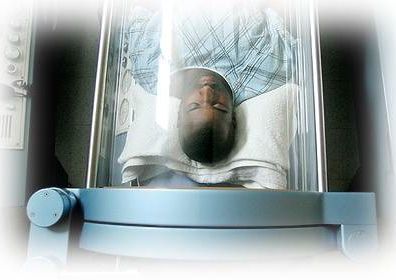
Since January 2007, ANH-USA has been bringing attention to a project to have veterans treated with HBOT. In HBOT, the patient is put in a hyperbaric oxygen chamber, which saturates the tissues with twelve times more oxygen than can be absorbed by breathing. This greatly enhances the body’s own healing process.

Under normal circumstances, oxygen is transported throughout the body only by red blood cells. With HBOT, oxygen is dissolved into all of the body’s fluids, the plasma, the central nervous system fluids, the lymph, and the bone, and can be carried to areas where circulation is diminished or blocked. In this way, extra oxygen can reach all of the damaged tissues and the body can support its own healing process. The increased oxygen greatly enhances the ability of white blood cells to kill bacteria, reduces swelling, and allows new blood vessels to grow more rapidly into the affected areas. It is a simple, non-invasive, and painless treatment.
According to Dr. Harch’s new study, even three years after the vets sustained brain injury, one month of HBOT was able to induce improvements in brain blood flow, cognition, symptoms, and quality of life, while the veterans experienced fewer suicidal thoughts.

Specifically, improvements were seen in 92% of vets experiencing short-term memory problems, 87% of those complaining of headaches, 93% of those with cognitive deficits, 75% with sleep disruption, and 93% with depression. There were also improvements in irritability, mood swings, impulsivity, balance, motor function, IQ, and blood flow in the brain, as well as the reduction in PTSD symptoms and suicidal thoughts. And there was a reduction in—or complete elimination of—psychoactive and narcotic prescription medication usage in 64% of those previously prescribed the medication.

One major problem is that the HBOT treatment is currently “off-label.” In other words, it is an FDA-approved treatment for some conditions—but not for traumatic brain injury (TBI) or PTSD. Because of this, the Department of Defense does not allow HBOT to be prescribed for its veterans—they say they don’t prescribe off-label medications and treatments for these diagnoses, and claim that they can only use HBOT after it has been approved by the FDA for this use.

This is a completely false and misleading statement! The Department of Defense often uses off-label antipsychotic drugs for treatment of TBI and PTSD. This should not surprise us. The FDA receives a large proportion of its budget from pharmaceutical manufacturers. And the government turns to drugs, often very inappropriate and damaging drugs, to treat damaged veterans without even considering alternatives.

Nearly 280,000 individuals received antipsychotic medication in 2007. Yet over 60% of them had no record of a diagnosis for which these drugs are approved. Antipsychotic drugs were prescribed off-label for PTSD (42% of the patients), minor depression (40%), major depression (23%), and anxiety disorder (20%)—with about 20% having more than one condition. About 20% of veterans diagnosed with PTSD—or nearly 87,000 patients—are prescribed an antipsychotic each year even though it is an off-label use.

TBI and PTSD severely and disproportionally affect military who have served in Iraq and Afghanistan—approximately 546,000 have TBI, post-concussion syndrome (PCS), and PTSD, and yet their treatment options are limited. HBOT is an effective and economical treatment for PCS and PTSD, without the very dangerous and negative side effects of antipsychotic medication.

The off-label use of HBOT is a huge freedom of choice issue in medicine. But even more important, if we really want to support our troops rather than just pay lip service, don’t we need to give them the safest, most economical, and most effective treatment for their traumatic brain injuries and PTSD?

Oct 8, 2011

This makes me fighting mad: Military continues off-label drug use

via Broken Warriors
 
This is the fifteenth story in an ongoing series.
a few excerpts:

"The U.S Central Command continues to back the use of Seroquel, a powerful antipsychotic, to treat insomnia in troops deployed to combat zones despite an expert panel's recommendation six months ago to cease the practice. The drug, known generically as quetiapine, has been linked to adverse effects, including heart failure.
In May, the Defense Pharmacy and Therapeutics Committee at its semiannual meeting said that the Food and Drug Administration had not approved any drugs in the class known as atypical antipsychotics, which includes Seroquel, for treatment of insomnia. Nonetheless, CENTCOM has approved the use of Seroquel in low, 25-milligram doses to treat sleep disorders.

In minutes of that meeting signed Aug. 5 by Dr. Jonathan Woodson, assistant secretary of Defense for Health Affairs, and posted to its website the same day, the committee said, "the use of low-dose AAPs [atypical antipsychotics] should be discouraged due to the lack of supportive evidence, risk of adverse events (metabolic and cardiac) and lack of monitoring (e.g. EKG) for adverse events in theater."

The Defense Health Board, a federal advisory group chartered to provide independent advice to the secretary of Defense, recommended in a draft report last month that Defense review its current guidance on the off-label or non-FDA-approved use of drugs, including Seroquel.
The pharmacy committee urged CENTCOM to use less dangerous drugs to treat insomnia. It said, "Other drug options to treat insomnia are available on the CENTCOM formulary, which have a lower risk of adverse events than the AAPs." Researchers at Vanderbilt University and the Nashville Veterans Affairs Medical Center reported in a January 2009 New England Journal of Medicine article that patients prescribed atypical antipsychotics, including Seroquel, had a significantly higher risk of sudden death from cardiac arrhythmias and other cardiac causes than patients who did not take these medications."

"An Army doctor who declined to be identified for publication, said he found it "quite remarkable that despite clear opposition to the continued use of the antipsychotics by [Office of the Assistant Secretary of Defense for] Health Affairs, and the [Pharmacy and Therapeutics] Committee, CENTCOM and the services continued to defend their use, all the while without anything but weak anecdotal evidence of efficacy."  read
hat tip:
D. Bunker at Psychiatry, It's a Killing
Bunker has a whole lot more on his site check it out!

Sep 15, 2011

Champions of Change? God Bless America and Protect Her Defenders...


The NIMH is honored by the White House as "Champions of Change."  I want to scream, cry stomp my feet---How in the hell can an agency with such a seriously  ethically challenged Director be a champion of anything?   How much studying does it take for   Champions, who are Public Servants and  "America's "experts" to see what is right in front of them?  The  research the American People have already paid for holds the answers...

via the NIMH

Back in 2008, the Army came to the National Institute of Mental Health and said, you know, we realize we have a problem, and during this timeframe, the Army had seen a doubling of their risk for suicide. Traditionally, the Army had had a much lower risk of suicide than the general civilian population. But over this time period, from the early 2000s to 2008, this risk for suicide within the military, and within the Army in particular, had continued to grow to the point where it had just then begun to exceed the civilian population’s risk. And so Army STARRS is a basic research project designed to provide the Army with vital information about, you know, what’s going on, what might lie behind this rise in suicide. With the urgency that the Army has and being able to take these findings and turn them into things that are actionable.

The Director of the NIMH, Thomas Insel, knows that psychiatric drugs used to treat PTSD and other psychiatric issues are contributing to the suicide rate. So are multiple longer deployments. These two factors are unique to veterans of Afghanistan and Iraq which have strangely not been mentioned in discussions as to why so many are killing themselves--more commit suicide than die in Afghanistan and Iraq. If Insel is unaware of these facts, then he should not be the Director of the NIMH.

I did not finish High School and have two years of college. At one time, I was majoring in psychology with the intent of going into research. For those who know where to look and how to read with comprehension, the answers are easy to find---I can not help but be very angry about this announcement that there will be three more years of "studying" this issue, because, "you know we realize we have a problem," and now there is a plan to work with researchers about three years to "study" what the cause of drug-induced suicide is!!?

I started writing this blog on September 4, 2010 on September 11, 2011 the post was about Thomas Insel here is a quote from a psychiatrist who blogs: 


"In World War I, we learned from the trench warfare that prolonged, sustained combat causes epidemic mental illness – the longer the exposure, the worse it gets. It was erroneously called Shell Shock in that war.  Then in World War II, we named it Combat Fatigue. In Viet Nam, it became PTSD. Our literature is filled with data supporting this intuitively obvious fact. So as Director of the National Institute of Mental Health, why in the hell wasn’t Tom Insel testifying to Congress and the Joint Chiefs about the insanity in their policy of letting [in fact incentivizing] our adolescents go back for five or more contiguous tours of duty in middle east wars – wars where they live with the constant knowledge that any person on the street might be another human bomb? It may be cleaner than the trenches, but psychologically it’s equally grim."  read the whole thing at 1 Boring Old Man


For an update on the true nature of this program, e.g. Experimental project with no scientific validity The Comprehensive Soldier Fitness Program


November 15,2010 Do Veterans Receive Care and Protection Needed?


November 21, 2010 American Veterans They Made it Back Alive to Die Here at Home


April 14,2011 Putting Troops in Harms Way: it's not accident or oversight

I wrote about this August 23, 2011 Psychiatric Drugs are Killing American Soldiers


March 20,2011 Female Soldier's suicide rate triples when at war--USA Today


May 20, 2011 is First Line Treatment for PTSD Developed From Insufficient Evidence?
This post has a report from the Institute of Medicine on effective PTSD treatment


From the Project on Government Oversight:
A Leader in Ethics Reform at NIMH Doesn't Think the Rules Apply To Him


NIH Needs New Leader On Ethics Reform


One more scandal

LinkWithin

Related Posts Plugin for WordPress, Blogger...

FAIR USE NOTICE: This may contain copyrighted
(C) material the use of which has not always been specifically authorized by the copyright owner. Such material is made available for educational purposes, to advance understanding of human rights, democracy, scientific, moral, ethical, and social justice issues, etc. It is believed that this constitutes a 'fair use' of any such copyrighted material as provided for in Title 17 U.S.C. section 107 of the US Copyright Law. This material is distributed without profit.